West is Best: The Ultimate Road Trip Through Utah, Idaho and Wyoming’s Most Underrated Public Lands
Most travellers rush to Yellowstone by the most obvious routes. This one takes the scenic road less driven — through Olympic ghost towns, bison islands, hot spring rivers, Native American cultural landmarks and the back side of the Tetons — and arrives at America’s first national park having already had the trip of a lifetime.
The Case for Going the Long Way Round
There is a version of the Yellowstone road trip that is essentially a logistics problem to be solved. You choose your entrance, you map your drive time, you book Old Faithful Inn six months in advance. You arrive, you see the geyser, you photograph the bison, you leave. It is a perfectly respectable way to spend a week.
And then there is this version.
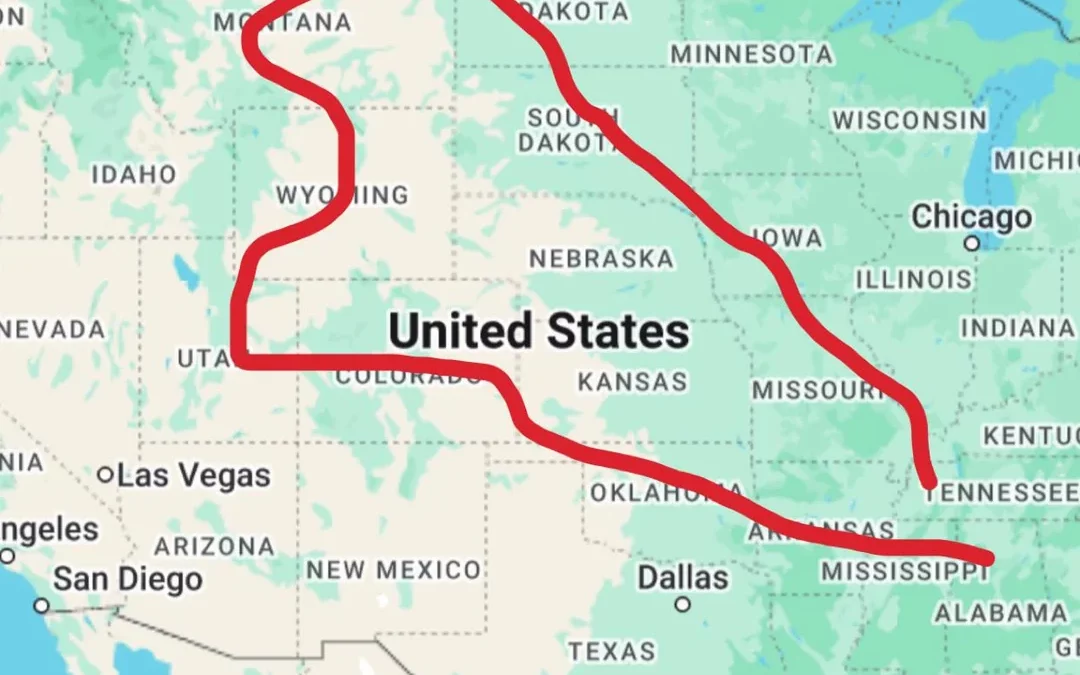
This route takes the western approach — crossing Utah, Idaho and Wyoming through landscapes and communities that most visitors to Yellowstone never see, never stop in, and frequently drive past without registering. It traverses the western side of the Rockies for hidden gems, gorgeous views and mountain air that has not yet been competed over. It follows a line that connects an Olympic host city preparing for its sustainable future to a bison island rising out of the Great Salt Lake, a pioneer candy factory producing the world’s most famous crackers, a Native American cultural landmark where the greeting is Tsaànde Tavai’ye — good day, in Shoshone — and a wellness town where the main activity is floating a river in a rubber tube.
It is, in short, the road trip you take when you already know that west is best.
Stop One: Park City, Utah — The Future of the West
Start in Park City, tucked into the folds of Utah’s Wasatch Mountains and close enough to Salt Lake City International Airport to be the logical first stop on a road trip heading north. Most people think of Park City as a winter destination — home to world-class skiing, the Sundance Film Festival, and the ski culture that defines mountain Utah. All of that is real. But arriving in summer, with the ski runs turned to wildflower meadows and the trails empty except for hikers and mountain bikers, Park City reveals a different and equally compelling version of itself.
The 400-acre Utah Olympic Park is the obvious place to begin. Built for the 2002 Winter Games and preparing for its second Olympic chapter when Salt Lake City hosts the 2034 Winter Games, the park offers two free museums covering the history of winter sport, an adventure course built around Olympic infrastructure, and the bobsled ride — a passenger vehicle that travels 65 miles per hour down the actual Olympic bobsled track. In summer, the jumps transition from snow to wheels, and you can watch freestyle ski athletes launching off ski jumps and landing in the swimming pool below, a sight that is simultaneously absurd and breathtaking. It is one of those experiences that exists nowhere else, in exactly this form, anywhere in the world.
Park City is aiming to become the first city to host a carbon-neutral Olympics. The goal of achieving net-zero carbon and running on 100 percent renewable energy by 2030 is not merely an aspiration but an active programme that shapes how the city operates day to day. It is easy to leave your car behind here — a comprehensive free bus network, equipped with ski and bike storage, connects the town’s hotels, ski areas, shopping districts, and trail access points. The 4.7-mile Silver Lake Trail, a hiker-only route that ends in gorgeous valley views, and the Flagstaff Loop, which delivers similar vistas by mountain bike, both offer access to terrain that is genuinely spectacular without the crowds that summer brings to more famous parks.
Historic Main Street is a must — 47 buildings with facades dating to the town’s founding in 1884, home to a restaurant and bar scene that punches well above a mountain town’s usual weight. The Australian-owned Twisted Fern, with its seasonally inspired upscale menu, and five5eeds, where the coffee is seriously good, are both worth building time around. For arts, Kimball Junction is home to Woodward, a year-round action sports park that is genuinely fun for adults who don’t consider themselves action sports people, as well as Utah Olympic Park itself. And for music, Deer Valley’s summer concert series — including performances by the Utah Symphony during the Deer Valley Music Festival — fills the expanded ski area (which doubled in size in 2025, now offering more than 4,300 acres of terrain) with an improbably elegant outdoor experience.
Park City is one of those places that generates the particular guilt of discovering somewhere excellent on the way to somewhere famous. Do it justice. Spend at least a night.
Stop Two: Antelope Island State Park, Utah — Solitude Near the City
Forty-five minutes from downtown Salt Lake City and a world away from it, Antelope Island rises from the surface of the Great Salt Lake with the uncanny quality of a landscape that has decided to be completely indifferent to the twenty-first century. Bison roam here. Pronghorn graze in the sage. Coyotes move through the dusk with the unhurried confidence of animals that know they are not being watched.
Access is via the Antelope Island Causeway from the town of Syracuse — a thin ribbon of road that crosses the lake itself, giving you extraordinary elevated views of the water before you arrive at the expanded visitor centre, which features interactive exhibits about this remarkable ecosystem and a 3D Giant Screen film that contextualises what you are about to experience. The film is a good investment of time, not because you will miss anything important without it, but because understanding the Great Salt Lake — one of the largest saltwater lakes in the western hemisphere, a remnant of the ancient Lake Bonneville that once covered much of Utah — deepens the experience of walking out into it.
The hiking options range from the very approachable to the genuinely remote. Buffalo Point Trail, a short one-mile out-and-back, delivers an elevated perspective across the park, the lake, and the surrounding mountains in under an hour. For those wanting to properly lose themselves, the Split Rock Loop Trail traverses 11.7 miles into the island’s backcountry, where the park manager describes the silence as “deafening” — a phrase that is both accurate and slightly alarming, because it is the kind of quiet that makes you aware of your own heartbeat.
The bison are the island’s signature draw, and you are almost guaranteed a sighting. A herd of 500 animals roams Antelope Island, joined by pronghorn, coyotes, and more than 300 species of migrating birds that use the lake as a critical stop on their routes north and south. In October, the annual Bison Round Up brings a different kind of spectacle: cowboys and volunteers on horseback moving the entire herd into pens for their annual health examinations, a tradition that is partly practical and partly one of the most visually extraordinary things you can watch for free in the American West.
Trail rides are offered year round for those who want to experience the island on horseback outside of the round-up. And when the sun goes down, Antelope Island reveals another dimension entirely: it is an International Dark Sky Park, and rangers lead star parties on select summer nights that introduce the cosmos above with the enthusiasm of people who genuinely cannot believe their luck at working somewhere this extraordinary. Five campgrounds and three cozy cottages handle overnights, and for dinner afterward the causeway leads back to Layton and Rooster’s Brewing, whose American pub fare and craft beers make an excellent close to a day spent somewhere genuinely unlike anywhere else.
Stop Three: Logan, Utah — Pioneer Living and Pepperidge Farm Crackers
Ninety minutes north of Salt Lake City, close enough to the journey to justify a stop and far enough from Park City to feel like a different world, Logan is the kind of small American city that rewards the traveller who has read ahead and knows what to look for — and confuses the one who is simply passing through.
Start at the American West Heritage Center in Wellsville, a 160-acre living history site where interpreters in period clothing bring to life the Mountain Man Camp, mock settlements, and a working farm that dates, in its essential character, to 1917. It is the sort of place that children explore with the focused intensity of people doing primary research, and that adults find themselves unexpectedly moved by: the physical demonstration of how recently the American West’s pioneer chapter was still ongoing has a different quality to a museum display.
Historic downtown Logan, centred on Main and Center Streets, is the kind of townscape that a filmmaker would build if they were trying to convey “small-town America” without the irony. The Cache Valley Visitors Bureau director describes it as looking like something out of a Hallmark movie, and while this comparison might seem to damn with faint praise, standing in the summer evening light with hanging flower baskets overhead and outdoor dining spilling onto the sidewalk, it is actually accurate and quite lovely.
The Bluebird Candy Factory has been hand-dipping chocolates and candies at this Logan landmark since 1914, a fact that is either unremarkable or extraordinary depending on how you feel about century-old institutions and handmade sweets. The region’s relationship with food production runs considerably deeper than candy, though. Every Pepperidge Farm Goldfish cracker sold west of the Mississippi is made here, in Logan. The Swiss cheese that adorns the sandwiches at Wendy’s and Arby’s nationwide comes from Gossner Foods, also in Logan. The city sits at the centre of a food production heritage that is both genuinely significant and almost entirely unacknowledged by the millions of people who consume its products daily. The self-guided Foodie Trek and Signature Products Tour is an enjoyable way to make this tangible.
Logan Canyon provides the evening’s scenic opportunity: a breathtaking drive north of town, past 26 trailheads — including the Wind Caves, where a four-mile roundtrip leads through spectacular geology to an actual cavern — ending 43 miles later at Bear Lake, the “Caribbean of the Rockies,” with its improbably turquoise water. Every summer, Cache Valley becomes Utah’s Heart of the Arts, with three historic theaters downtown staging full-orchestra musical theater productions and free concerts running in the restored Tabernacle building every weekday from mid-May through August. It is an unlikely cultural epicentre, and one that Logan has clearly decided to be entirely unapologetic about.
Stop Four: Fort Hall, Idaho — Choose a Culture Stay
Southeastern Idaho is the ancestral land of the Shoshone-Bannock Tribes — the eastern and western bands of the Northern Shoshone and the Bannock people — and Fort Hall is where their present-day community has built something genuinely worth stopping for on the western approach to Yellowstone.
The Shoshone-Bannock Hotel Casino is not what the name might suggest to a traveller expecting a generic gaming resort. It is an entertainment destination and cultural landmark that functions, through deliberate design, as a point of genuine engagement with one of the oldest continuous cultures in the Mountain West. The 156 rooms and 11 suites are comfortable and well-appointed — flat-screen televisions, 24-hour fitness centre, cozy and rustic furnishings that belong to the landscape rather than fighting against it. But the building around those rooms is where the stay becomes interesting.
New in 2026 is the Camas Restaurant, redesigned with an upscale menu that draws on Native American culinary traditions — fewer finger foods and shared plates, more fork-and-knife dishes with intentional flavour and presentation, served on walls adorned with artwork commissioned from local Shoshone-Bannock artists. The Donzia Gift Shop — donzia meaning wildflower in Shoshone — sells beaded jewelry, artwork, and handcrafts made by local community members, and it functions as much as a cultural showcase as a retail operation. The shop’s merchandise is a direct connection to the living craft traditions of the Tribes, not a reproduction.
Throughout the property, you’ll encounter the Shoshone and Bannock languages made visible: salmon is agaì (pronounced ah-guy), bear is wedaà (weh-duh), coyote is izhapeè (ee-zha-puh). Staff and other visitors may greet you with Tsaànde Tavai’ye — pronounced zaan-duh dah-vay-yeh — which means good day. These are not decorative touches. They are a community insisting, quietly and persistently, that its language and culture are present and alive.
From May through September, the property hosts an outdoor summer concert series, and in August the Shoshone-Bannock Indian Festival brings a powwow whose Grand Entry is open to the public — an opportunity to witness different styles of Native American dancing performed by dancers from across the country. If you visit during the festival, come with respect and curiosity in equal measure.
Stop Five: Blackfoot and Idaho Falls — Potatoes, Penguins, and a River That Lights Up at Night
The stretch of highway between Fort Hall and Idaho Falls is not conventionally beautiful — flat agricultural land, irrigation infrastructure, the practical working landscape of a region that feeds a significant portion of the United States. But stop in Blackfoot first, because the Idaho Potato Museum is exactly the kind of institution that sounds like a joke until you’re standing inside it, genuinely fascinated.
The potato saved Europeans from frequent famines and was the first vegetable grown in space. This is established fact, and the Museum presents it with the quiet pride of a community that has spent generations growing something the rest of the world took for granted. The Mr. Potato Head exhibit is delightful. The world’s largest Pringle and the Vice-Presidential signed spud are displayed with deadpan seriousness. The Potato Station Cafe serves baked potatoes, fries, and potato salad to visitors who are, by this point, entirely on board with the potato as a subject of serious cultural investigation. Free taters for out-of-staters, says the sign outside. This is not a trap.
Idaho Falls, just down the highway, is the most consequential practical stop on the western Yellowstone approach: less than two hours from both Yellowstone and Grand Teton, served by direct flights from 16 US cities including Dallas and Portland via Idaho Falls Regional Airport, and home to a downtown that is far more engaging than its position as a gateway city might suggest.
The Snake River Greenbelt is the town’s most unexpected asset. Human-made waterfalls — built as infrastructure for the hydroelectric plant that powers the city — light up the Snake River each night with a spectacle that is genuinely beautiful, and the Greenbelt’s five paved miles through downtown are lined with creative benches, public art, and live music venues. Walk the river in the evening and stop at Snow Eagle Brewery and Grill for American pub fare and Japanese dishes that coexist on the menu with surprising coherence, or at Smitty’s Pancake and Steakhouse for the potato pancakes, which are a local legend for entirely justifiable reasons.
The XVIII Speakeasy, found underground on the appropriate side of a non-descript door, serves cocktails built from local ingredients with an upscale yet rustic atmosphere and a zero-proof menu that takes non-alcoholic drinks seriously enough to include elderflower tonic and bitters combinations that are as considered as anything on the alcoholic list. The Celt Pub handles the Irish fare and live music contingency. For overnight stays, Destinations Inn is a genuinely eccentric fourteen-room boutique hotel where each room is themed to a different destination — Paris, Alaska, Thailand — with the special details to match, and tours of the property are offered on Wednesday and Saturday afternoons.
The Idaho Falls Zoo, billed as “the best little zoo in the West,” houses red pandas and African penguins among its residents, and has played a significant role in breeding programmes for endangered species. It is small enough to see completely in a couple of hours and large enough to be genuinely interesting throughout. It is closed in winter, which is a reasonable choice for a zoo in southeastern Idaho.
Stop Six: Lava Hot Springs, Idaho — The Art of Doing Nothing Particularly Well
Somewhere between Idaho Falls and the Wyoming border, tucked into a valley surrounded by mountains, the town of Lava Hot Springs has built an entire identity around the proposition that the best thing to do in a beautiful place is to slow down and actually be in it.
The hot springs themselves are the obvious starting point. Lava Hot Springs State Foundation operates five outdoor sulfur-free pools fed by water that emerges from the earth at pleasantly, usefully hot temperatures — not the scalding geothermal extremes that Yellowstone will deliver but a therapeutic warmth that does exactly what the name promises. Three other hot springs facilities operate in town, including the Olympic Swimming Complex with its water slides, and several hotels offer private hot springs pools as part of the room package, allowing guests to soak at whatever hour the impulse strikes.
The Portneuf River runs straight through the middle of town, and locals have turned tubing it into both a sport and a philosophy. Rent a tube and a life jacket at any of several stands near the hot springs complex, drop into the river in the middle of town, and float. The experience requires no skill, almost no effort, and the kind of willingness to look slightly ridiculous that most adults find difficult to muster and most children achieve instantly. It is a flow state in the literal sense — the psychologists’ term for a state of total absorption that allows you to relax and avoid distraction — delivered by geography.
Above town, the Idaho Centennial Trail passes through fields of Indian Paintbrush and Mountain Bluebell. For a less aerobic engagement with the landscape, Blaser Road offers a peaceful scenic drive with regular opportunities to stop and listen to birdsong, which is in this context not a euphemism for anything but an actual invitation to stand still and pay attention to what is audible when you stop making noise.
The food and drink scene is, for a small wellness town, serious. Eruption Brewery and Bistro, opened in 2024, operates out of a log-and-stone building and takes its farm-to-table menu as seriously as its beer programme, which is saying something. Ye Old Chuckwagon Restaurant handles breakfast with scones and cinnamon buns, and burgers and sandwiches through the rest of the day, with the relaxed atmosphere of a place that has been feeding people well for a long time and sees no reason to change.
At the end of May each year, Lava Hot Springs hosts its Spring Into Wellness festival, which brings yoga classes, sound baths, nature walks, and speakers on everything from the healing properties of the local waters to Indigenous medicine and herbology to a town that is already thinking about wellness as its defining proposition. Visit in shoulder season — fall, winter, or early spring — and you will find fewer people, more affordable accommodation, and hot pools that feel all the more restorative for the chill in the air above them.
The Final Approach: The West Side of the Tetons
As you cross from Idaho into Wyoming, the road trip delivers its most dramatic visual payoff. The Teton Range, viewed from the west, is not the postcard image that has made it one of the world’s most recognisable mountain profiles. It is something different: a series of jagged peaks seen from the opposite angle, their west-facing flanks catching the morning light in a way that the famous eastern reflection shots at Schwabacher Landing can never capture. This side of the Tetons is home to uncrowded trails, hot spring soaks in the forest, and a sense of wilderness that the busier eastern approaches to Grand Teton National Park cannot always provide.
Jackson Hole, the valley that connects the western approach to the park’s official boundaries, offers a complete destination in its own right. Jackson town — the buzzing hub of galleries, restaurants, and Western wear — sits at the valley’s southern end. The ski areas of Jackson Hole Mountain Resort and Snow King Mountain offer summer adventure of every kind, from the Via Ferrata to the Aerial Tram that delivers 4,139 vertical feet of vertical gain in a gondola car with views that are, by any objective standard, unreasonable.
But the western approach to Yellowstone that this road trip has traced is fundamentally about what happens before and around the famous places, not instead of them. Arriving at Yellowstone’s South Entrance — the gateway used by travellers coming from Jackson and Grand Teton — after the journey described in these pages, you carry with you the weight of everything the American West has already offered: the Olympic heritage and sustainable mountain culture of Park City, the bison-scattered silence of Antelope Island, the pioneer living history of Logan’s heritage centres, the Shoshone language alive in Fort Hall, the river-lit nights of Idaho Falls, the therapeutic hot pools of Lava Hot Springs, and the back side of the Tetons seen in the morning light before anyone else arrived.
Yellowstone will be extraordinary. It always is. But the road that got you there will be, in its own way, just as good.
Planning Your Trip: Practical Notes
Starting point: Park City, Utah, is 30 minutes from Salt Lake City International Airport, which offers direct connections from most major US cities. Idaho Falls Regional Airport provides an alternative access point for the later stages of the route, with direct flights from Dallas, Portland, and other cities.
Duration: Allow at least seven to ten days to do this route justice. A rushed version can be completed in five, but the stops that reward lingering — Antelope Island, Lava Hot Springs, Fort Hall — deserve more than a passing look.
Best season: Late May through September covers most of this route well. Antelope Island is best avoided during the brief midge season in spring. Lava Hot Springs is excellent year-round. Yellowstone’s West Entrance is open to passenger vehicles from late April through early November.
Accommodation highlights: Park City offers a full range from ski-chalet luxury to ski-town boutique. Antelope Island has campgrounds and cottages within the park. Logan is well-served by national chain hotels. The Shoshone-Bannock Hotel Casino at Fort Hall is the cultural choice in that stretch. Idaho Falls’ Destinations Inn is worth the reservation if quirky boutique is your style. Lava Hot Springs’ hotels with private hot springs pools are the obvious choice in the wellness town.
Don’t miss: The Bison Round Up at Antelope Island in October if your timing allows; the Shoshone-Bannock Indian Festival in August at Fort Hall; the Spring Into Wellness festival at Lava Hot Springs in late May; Deer Valley’s summer concert series in Park City.
The Verdict
The western approach to Yellowstone is not the route that the majority of the park’s four-plus million annual visitors take. It is longer, in miles and in time, than the direct drives from Denver, Salt Lake City or Bozeman. It asks you to stop in places you may not have heard of and engage with communities that do not feature prominently in national travel coverage.
It rewards you accordingly. The discovery of Antelope Island’s bison herd at sunrise, of a hot river running through a mountain town, of a language being kept alive in a gift shop in southeastern Idaho — these are the experiences that outlast any number of geyser photographs in the memory of a traveller who has genuinely paid attention.
West is best. The road proves it.
Have you taken the western approach to Yellowstone? Share your favourite stops and hidden gems in the comments below — we’d love to build on this route.
Focus keyword: Utah Idaho Wyoming road trip Yellowstone
Tags: Yellowstone road trip, Utah travel, Idaho travel, Wyoming travel, Park City, Antelope Island, Lava Hot Springs, Fort Hall, Idaho Falls, Grand Teton, road trip USA, national parks, underrated destinations, Mountain West, family road trip
Why This Route Beats the Crowds — Every Time
There is a specific kind of exhaustion that comes from visiting a famous place at peak season. You recognise it the moment you arrive at a parking lot that was full before you got there, or queue for a viewing platform behind fifty other people all trying to photograph the same thing at the same moment. The experience is real — the landscape is genuinely extraordinary — but something about the density of human presence changes its quality. You are not so much discovering somewhere as attending it.
The western approach to Yellowstone solves this problem by design. The places on this route are not undiscovered — Antelope Island hosts significant visitor numbers, Park City is internationally known for its ski culture, Lava Hot Springs draws a devoted following of wellness travellers — but they are operating at a human scale that allows genuine engagement rather than managed observation. The bison herd on Antelope Island is not fenced in a wildlife preserve. The hot springs at Lava are not themed and sold back to you. The Shoshone-Bannock culture at Fort Hall is not performed for an audience; it is simply present, available to those who approach it with curiosity and respect.
The American Mountain West is large enough — genuinely, incomprehensibly large — to absorb many more travellers than it currently sees, if those travellers are willing to look west of the main routes. The four million-plus visitors who arrive at Yellowstone annually are concentrated on a few roads, a few viewpoints, a few predictable corridors. The landscape on either side of those corridors is vast, beautiful, and remarkably quiet.
This road trip is one path through that quiet. It is not the only one. The Mountain West rewards the traveller who develops the habit of turning off the main highway, checking what the next town has to offer, and building an itinerary that accumulates texture rather than simply checking destinations. The Gold Fish crackers in Blackfoot, the speakeasy in Idaho Falls, the Shoshone word for bear on a hotel wall in Fort Hall — none of these appear in the top-ten Yellowstone lists, and all of them are better for it.
Eating and Drinking Along the Way: A Curated List
No road trip blog post is complete without an honest account of where to eat, and this route has enough good food moments to justify a dedicated section.
Park City offers the widest range — from the globally-minded menu at Twisted Fern on Kearns Boulevard (order seasonal and let the kitchen decide) to the reliably excellent coffee and breakfast at five5eeds, which understands that Australian café culture and mountain Utah have more in common than you might expect. In summer, the Deer Valley Music Festival’s outdoor dining sets a standard for eating in beautiful places that the rest of the route will struggle to match aesthetically but frequently surpasses in character.
Logan’s Foodie Trek is a genuinely enjoyable way to spend a morning, sampling the region’s remarkable food production heritage — cheese curds from Gossner, honey from local apiaries, ice cream that somehow justifies a detour. The Bluebird Candy Factory’s chocolates make excellent road trip provisions for the hours ahead.
Blackfoot’s Potato Station Cafe serves its potato-based menu with a straight face and completely deserves yours. The baked potato — ordered two hours in advance, as the sign instructs — is a serious piece of cooking for a museum cafe.
Idaho Falls is the meal stop that most surprises people who come expecting a utilitarian gateway city and find instead a Snake River Greenbelt with a Saturday farmers market and a speakeasy serving zero-proof cocktails with elderflower tonic. Snow Eagle Brewery and Grill handles the casual dinner well; XVIII handles the late-evening cocktail hour even better.
Lava Hot Springs’ Eruption Brewery and Bistro is the best restaurant on the route that no one outside the region has heard of. Farm-to-table in a log-and-stone setting, with a beer list that takes the brewing as seriously as the food. Book ahead in peak season.
Jackson — for the final approach — offers everything from elk burgers at the Million Dollar Cowboy Bar to the kind of contemporary American fine dining that the concentration of wealthy second-home owners in the valley makes commercially viable. The Bunnery, a Jackson institution, handles breakfast with a devotion to whole grains and house-baked goods that has attracted a loyal following for decades.
For Families: Making This Route Work With Children
The western Yellowstone approach is, with a few adjustments, an excellent family road trip, and several of its stops are actively better with children than without them.
The Utah Olympic Park in Park City is an obvious win — the bobsled experience alone will be discussed for years — but the summer schedule of freestyle skiing practice sessions (athletes launching off jumps into pools) provides spontaneous spectacle that no amount of theme park engineering could match. The bobsled ride’s age and height minimums apply; check the website before building it into a family itinerary.
Antelope Island State Park is superb for families precisely because its wildlife is wild. A bison sighting is almost guaranteed, and experiencing a herd of 500 large animals moving through open grassland is a fundamentally different experience from a zoo enclosure. The Buffalo Point Trail is appropriate for younger walkers. The campgrounds inside the park make for a memorable night under dark skies.
The Idaho Potato Museum in Blackfoot is, despite every temptation to dismiss it, excellent for children. The Mr. Potato Head exhibit is physically interactive. The Potato Station Cafe feeds them something they will actually eat. The free potato for out-of-state visitors creates a moment of mild absurdity that children respond to with appropriate enthusiasm.
Idaho Falls Zoo — the best little zoo in the West, in the assessment of many who have visited it — is scaled appropriately for families with young children. Seeing it entirely in a couple of hours means no one’s legs give out before the penguins. The Snake River Greenbelt’s creative benches, including one shaped like a grizzly bear, delight the under-tens.
Lava Hot Springs is the family road trip’s natural rest stop: the Olympic Swimming Complex with its water slides handles the children while the adults visit the hot pools, and the river tubing is appropriate for swimmers of most ages and abilities. The town’s walkable layout means no one needs to get back in the car for the afternoon.

Escrito por Kariss
Más de esta categoría
Mi peregrinación a Lourdes, Francia
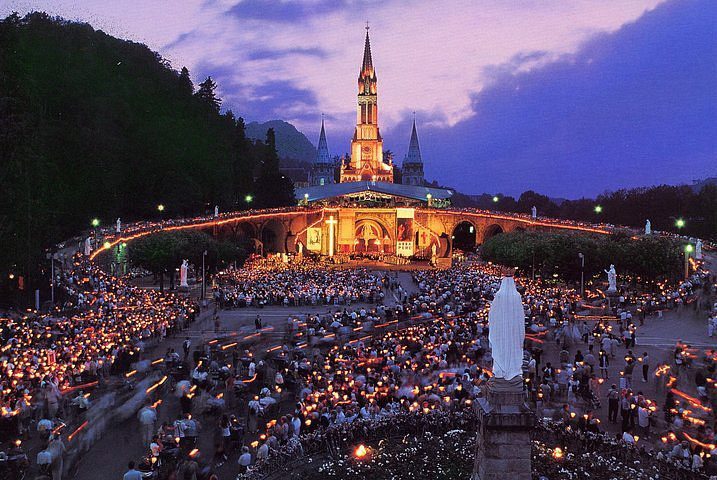
Mi peregrinación a Lourdes, Francia, fue más que un viaje: fue una experiencia profundamente personal de fe, familia y renovación. Viajando desde París en un tren nocturno, mi familia y yo llegamos en las primeras horas de la mañana, llenos de anticipación y oración. Desde nuestra estancia en la Casa Nunes hasta la participación en los rituales sagrados del Santuario, cada momento estuvo marcado por la reflexión, la unidad y el propósito espiritual.
Mi peregrinación a Lourdes, Francia
Mi peregrinación a Lourdes, Francia, fue más que un viaje: fue una experiencia profundamente personal de fe, familia y renovación. Viajando desde París en un tren nocturno, mi familia y yo llegamos en las primeras horas de la mañana, llenos de anticipación y oración. Desde nuestra estancia en la Casa Nunes hasta la participación en los rituales sagrados del Santuario, cada momento estuvo marcado por la reflexión, la unidad y el propósito espiritual.
Mi peregrinación a Lourdes, Francia
Mi peregrinación a Lourdes, Francia, fue más que un viaje: fue una experiencia profundamente personal de fe, familia y renovación. Viajando desde París en un tren nocturno, mi familia y yo llegamos en las primeras horas de la mañana, llenos de anticipación y oración. Desde nuestra estancia en la Casa Nunes hasta la participación en los rituales sagrados del Santuario, cada momento estuvo marcado por la reflexión, la unidad y el propósito espiritual.
0 Comentarios
Nuestro boletín
 English
  Français
  Español
0 comentarios