
La Sagrada Família: An Encounter With Time, Faith, and Genius
-
Introduction: More Than a Visit, an Encounter
There are destinations you check off a list—and then there are places that reframe your understanding of beauty, patience, and human ambition. La Sagrada Família belongs unmistakably to the latter. On April 1st, 2026, I walked into Antoni Gaudí’s unfinished masterpiece not merely as a traveler, but as a witness to one of the most ambitious artistic and spiritual projects ever undertaken.
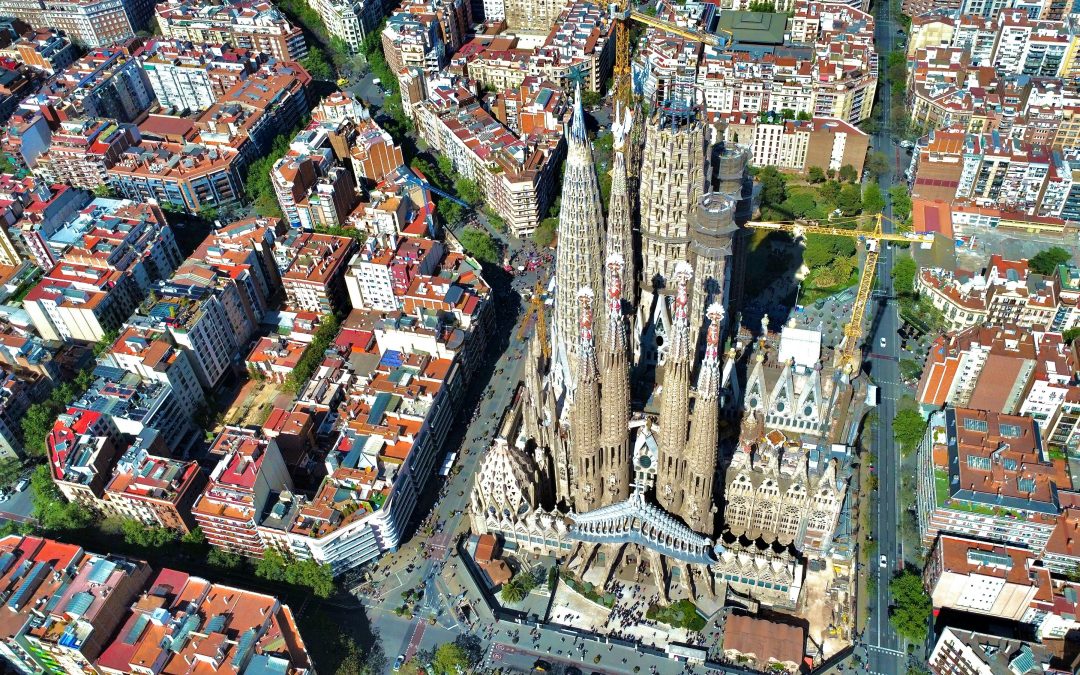
Located in the heart of Barcelona, La Sagrada Família defies easy categorization. It is a basilica, an architectural experiment, a theological manifesto, and a living construction site more than 140 years in the making. Visiting it is not a passive experience; it is immersive, emotional, and deeply personal.
For luxury travelers, it offers refinement, rarity, and meaning.
For spiritual travelers, it offers silence, symbolism, and transcendence.
For architecture enthusiasts, it offers an unparalleled lesson in form, structure, and vision.Few landmarks in the world manage to speak fluently to all three.
The Vision of Antoni Gaudí: Architecture as a Sacred Language
To understand La Sagrada Família, one must first understand Antoni Gaudí, not merely as an architect, but as a philosopher of form. Gaudí believed that architecture should not imitate previous styles—it should interpret nature, because nature, in his view, was the ultimate expression of divine intelligence.
When Gaudí took over the project in 1883, he transformed it entirely. His vision rejected rigid Gothic conventions and embraced organic geometry, ruled surfaces, hyperboloids, helicoids, and natural proportions found in trees, bones, shells, and mountains.
Gaudí was also deeply spiritual. For him, La Sagrada Família was not about personal recognition. He famously accepted that he would never see it completed, stating that “my client is not in a hurry.” That client, of course, was God.
This mindset defines the entire basilica: timeless, patient, and uncompromising.
First Impressions: The Exterior That Refuses to Be Ignored
Approaching La Sagrada Família is a moment of controlled astonishment. The basilica does not reveal itself all at once. Instead, it unfolds slowly, demanding attention and rewarding observation.
The Nativity Façade: Celebration of Life
The Nativity Façade, completed during Gaudí’s lifetime, is exuberant, emotional, and richly detailed. It celebrates birth, creation, and hope. Every surface is alive with sculptural intensity—plants, animals, angels, and human figures exist in harmonious density.
For the spiritually inclined, this façade reads like a visual prayer.
For architecture lovers, it is a masterclass in narrative sculpture.
For luxury travelers, it offers something rare: authenticity untouched by modern reinterpretation.The craftsmanship here feels intimate, almost tender—an unusual quality for stone.
The Passion Façade: Confronting Suffering
In stark contrast, the Passion Façade strips emotion down to its rawest form. Sharp angles, skeletal figures, and minimal ornamentation convey suffering, sacrifice, and mortality.
This façade is intentionally uncomfortable. It forces reflection. Standing before it, one cannot remain neutral—it provokes silence, stillness, and contemplation.
Few landmarks dare to unsettle their visitors. La Sagrada Família does so deliberately.
Entering the Basilica: When Light Becomes Architecture
If the exterior impresses, the interior transforms.
Crossing the threshold on that April morning felt like stepping into a different realm. The first sensation was not visual—it was acoustic. Sound softens here. Voices lower instinctively.
Then comes the light.
A Forest of Stone
The interior columns rise like towering trees, branching as they ascend. Gaudí designed them this way to mimic natural load distribution, eliminating the need for traditional flying buttresses.
The result is breathtaking: a cathedral that feels less like a building and more like a sacred forest. There is no heaviness, no oppression—only elevation.
Stained Glass and Time
The stained‑glass windows are carefully oriented to the sun’s movement. Morning light bathes the interior in blues and greens, evoking calm and renewal. Afternoon light introduces warmer reds and golds, creating a sense of culmination and reflection.
On April 1st, 2026, the light shifted gently as I stood there, making time itself feel visible.
For photographers, this is a dream.
For spiritual visitors, it is meditation through color.
For luxury travelers, it is sensory excellence without excess.
Sacred Geometry and Structural Genius
La Sagrada Família is often described as beautiful—but beauty here is the result of mathematics.
Gaudí employed complex geometrical forms long before computers existed. Hyperboloids, paraboloids, and catenary arches are not decorative choices; they are structural solutions derived from nature.
Modern architects still study this basilica not as a historical curiosity, but as a forward‑thinking experiment.
What makes this extraordinary is that the building feels emotional despite its mathematical precision. Rarely do logic and poetry coexist so effortlessly.
A Basilica Still Under Construction: The Luxury of Witnessing Process
One of La Sagrada Família’s most compelling qualities is that it remains unfinished. Cranes rise beside spires. Stonecutters continue their work. Technology now collaborates with tradition.
For some, this is surprising. For others, it is profoundly moving.
Luxury travel today is no longer just about comfort—it is about access to rarity and authenticity. Witnessing a masterpiece still becoming is a privilege few landmarks offer.
This ongoing construction transforms La Sagrada Família from a static monument into a living legacy.
A Space for Spiritual Reflection—Regardless of Belief
You do not need to be religious to feel something here.
As I sat quietly inside the basilica, surrounded by visitors from every corner of the world, there was a shared stillness. People paused. Phones lowered. Silence expanded.
La Sagrada Família creates space—for thought, for humility, for perspective.
In a world driven by urgency and distraction, this may be its greatest gift.
The Luxury Travel Perspective: Why La Sagrada Família Is Essential
For luxury travelers, La Sagrada Família delivers what high‑end experiences increasingly seek:
- Exclusivity through meaning, not price
- Depth over spectacle
- Cultural capital rather than superficial indulgence
Private guided visits, early‑morning entry, and expert architectural tours elevate the experience further, allowing travelers to engage with the basilica intellectually and emotionally.
It is not a backdrop for photos—it is a destination that enhances one’s understanding of the world.
Practical Visitor Insights
Best Time to Visit
- Early morning or late afternoon for optimal light
- Weekdays are quieter than weekends
Tickets & Tours
- Book in advance to avoid long queues
- Guided tours add significant value, especially for architecture enthusiasts
Dress & Etiquette
- Modest attire is required (this is an active basilica)
- Silence is encouraged in certain areas
(Affiliate opportunities: guided tours, premium passes, travel insurance, Barcelona hotels)
Leaving La Sagrada Família: Changed, Not Just Informed
When I exited the basilica that day, Barcelona felt different. Louder. Faster. More temporary.
La Sagrada Família stayed with me—not as a memory, but as a reference point. It redefined what patience can achieve, what faith can inspire, and what architecture can communicate when it refuses to compromise.
April 1st, 2026 was not just a visit. It was a moment of recalibration.
Conclusion: Why La Sagrada Família Endures
La Sagrada Família is not simply Barcelona’s most famous landmark. It is one of humanity’s most ambitious conversations with eternity.
It speaks to travelers who seek beauty with substance, spirituality without dogma, and luxury rooted in meaning.
Few places invite admiration.
Fewer invite reflection.
Almost none invite transformation.La Sagrada Família does all three—and that is why it endures.

Written by Kariss
More From This Category
A Mediterranean Dream
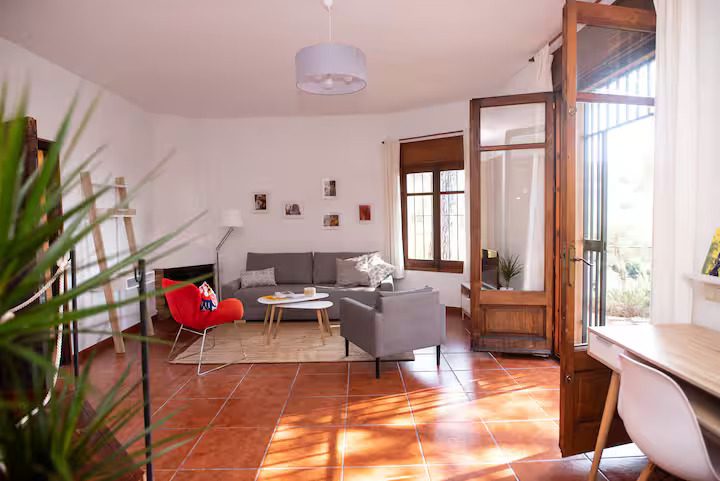
Nestled along the Catalonian coast, just a short drive from Barcelona, Cabrils is a charming village that seems to exist in perfect harmony with the sea and the surrounding mountains. It’s not the kind of place that overwhelms you with crowds or flashy attractions. Instead, it invites you to slow down, to breathe, and to immerse yourself in a gentler rhythm of life. For three days, this tranquil corner of Spain became our home—and at the heart of our experience was Carla, our exceptional Airbnb host.
A Mediterranean Dream
Nestled along the Catalonian coast, just a short drive from Barcelona, Cabrils is a charming village that seems to exist in perfect harmony with the sea and the surrounding mountains. It’s not the kind of place that overwhelms you with crowds or flashy attractions. Instead, it invites you to slow down, to breathe, and to immerse yourself in a gentler rhythm of life. For three days, this tranquil corner of Spain became our home—and at the heart of our experience was Carla, our exceptional Airbnb host.
A Mediterranean Dream
Nestled along the Catalonian coast, just a short drive from Barcelona, Cabrils is a charming village that seems to exist in perfect harmony with the sea and the surrounding mountains. It’s not the kind of place that overwhelms you with crowds or flashy attractions. Instead, it invites you to slow down, to breathe, and to immerse yourself in a gentler rhythm of life. For three days, this tranquil corner of Spain became our home—and at the heart of our experience was Carla, our exceptional Airbnb host.
 English
  Français
  Español
0 Comments