
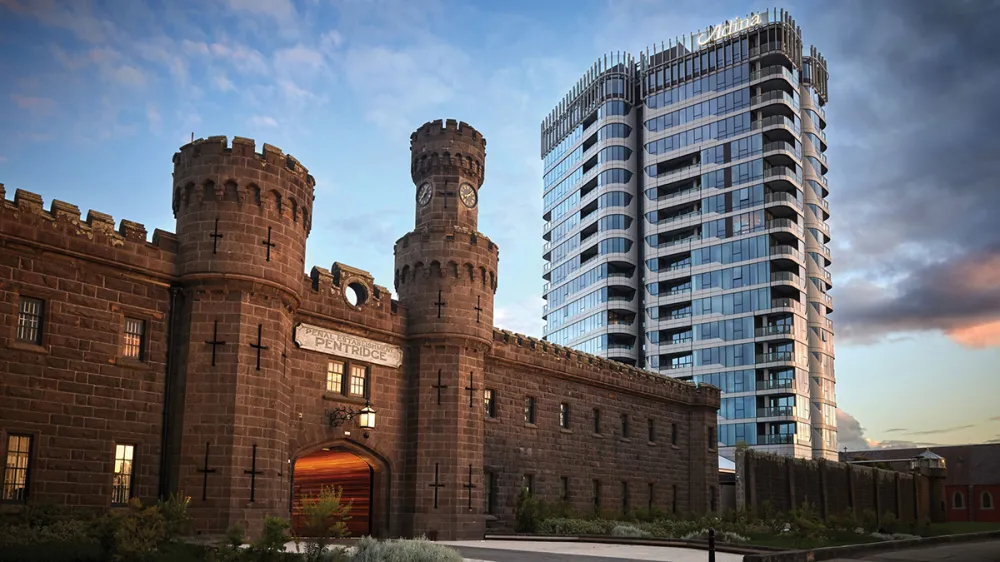

Doing Time in Style: The World’s Most Extraordinary Hotels in Converted Prisons and Courtrooms
There’s something deeply, deliciously perverse about paying several hundred pounds a night to sleep in a cell. But as a growing number of architects, hoteliers, and heritage conservationists have discovered, the world’s former jails, courthouses, and police stations make for some of the most compelling — and surprisingly comfortable — places to lay your head.
Checked In, Locked Up
The first thing you notice, arriving at a hotel that was once a prison, is that the architecture means business. These are not buildings that whisper. The stone walls are thick, the ironwork is heavy, the ceilings loom with the authority of institutions that were built to contain, to intimidate, to endure. There is no soft-focus lobby with a fireplace and a chesterfield sofa. There is, instead, a gatehouse. A portcullis. A door that was designed, very deliberately, to keep people in rather than welcome them through.
And yet here you are, with a reservation and a rolling suitcase, being handed a key card with a smile.
Welcome to one of the most fascinating and fast-growing niches in the world of hospitality: the converted prison hotel. From Cornwall to Kyoto, from Boston to the Netherlands, former places of punishment and incarceration are being reimagined as some of the most distinctive luxury properties on the planet. The cell is now a suite. The exercise yard is now a courtyard garden. The dock where the condemned once stood is now a cocktail bar.
It’s an idea that should, by any rational measure, feel grotesque. And yet it works — spectacularly, compellingly, and in ways that reveal something interesting about how we relate to history, to architecture, and to the peculiar pleasures of sleeping somewhere with a genuine story to tell.
Why Prisons Make Perfect Hotels
Before checking into any of these remarkable properties, it’s worth asking a basic question: why do prisons convert so well into hotels in the first place?
The answer, it turns out, is almost architectural destiny. Prisons were built to house large numbers of people in small, uniform rooms. They required robust plumbing, individual ventilation, and — in the Victorian era particularly — a moral philosophy of personal reflection and quiet contemplation. Sound familiar? The brief for a nineteenth-century prison cell and a twenty-first century boutique hotel room are, in structural terms, surprisingly similar.
The radial design that characterises many Victorian prisons — long wings of cells branching off a central hub, all visible from a single observation point — translates naturally into hotel corridors lined with rooms. The thick stone walls that once prevented escape now deliver exceptional sound insulation. The high, barred windows that once denied inmates a view of the outside world now flood rooms with natural light when the bars are retained as a design feature rather than a security measure. The grand institutional architecture — the vaulted entrance halls, the wrought-iron galleries, the chapel domes — gives converted prison hotels a sense of scale and drama that no purpose-built hotel can manufacture.
And then there is the history. Every prison arrives pre-loaded with stories: famous inmates, dramatic escapes, moments of injustice and redemption that have seeped into the very fabric of the walls. For a hotel brand trying to differentiate itself in a crowded market, that is priceless. You cannot build this kind of narrative. You can only inherit it, preserve it, and learn to tell it well.
Heritage conservationists have also played a significant role in driving the trend. As Victorian prisons and Edwardian police courts have aged out of use — too expensive to modernise, too historically significant to demolish — adaptive reuse as hotels has emerged as one of the most viable routes to preservation. The developer gets a unique product. The building gets a future. The public gets access to structures that might otherwise be lost behind razor wire forever.
Bodmin Jail Hotel, Cornwall: Two Centuries of Darkness, Transformed
Start, as all good ghost stories do, in Cornwall.
Bodmin Gaol is one of Britain’s most storied prisons, and one of its most ambitious hotel conversions. The original structure opened in 1779, designed to house the county’s criminals, debtors, and condemned in an era when the law was applied with a bluntness that makes the modern reader wince. For nearly 150 years, Bodmin Gaol was the last thing many people saw before the gallows. Public executions were held here until 1862, when the practice was finally moved indoors. The prison closed its gates as a functioning penal institution in 1927.
What followed was a century of confused repurposing. The site cycled through its post-prison life with the restless energy of a building that couldn’t quite decide what it wanted to be: a fishmonger’s storage facility, a World War Two naval base, an amusement arcade, a nightclub. None of it quite worked. The structure was too grand, too Gothic, too freighted with weight and meaning to submit to mere commerce.
Then, in 2021, a £65 million investment by Tudor Hotels Collection changed everything.
The Bodmin Jail Hotel that opened that year is a triumph of sensitive, imaginative conversion. Each guest room has been carved from three original prison cells — the walls knocked through to create a space that is, by any contemporary standard, entirely comfortable, while retaining the arched stone doorways, the deep-set windows, and the sense of material weight that makes the building what it is. The result is rooms that feel genuinely theatrical without tipping into theme-park pastiche. You are not sleeping in a reconstruction of a prison. You are sleeping in an actual one, rearranged for your comfort.
The restaurant occupies the former prison chapel — a soaring, vaulted space that transforms remarkably well into a dining room, the arched windows delivering exactly the kind of ecclesiastical light that makes a Sunday lunch feel vaguely ceremonial. The menu skews towards hearty Cornish produce: seafood landed nearby, meats from farms across the county, puddings that take the edge off the chill that the thick stone walls never entirely surrender.
But the real genius of the Bodmin Jail Hotel is what it does with the parts it hasn’t converted into bedrooms. The Bodmin Jail Attraction, housed in the remaining historic structure, offers guided tours of original cell wings, the condemned cells, the punishment block, and a meticulously restored Victorian execution pit. It is, at times, genuinely disturbing — and all the more valuable for it. The hotel does not shy away from the building’s history. It leans into it, presenting the past with historical honesty rather than sanitising it into something palatable.
Standing in the execution pit, the rope above you, the stone walls around you, and then walking back upstairs to a glass of Cornish wine in the former chapel restaurant — that contrast is exactly what makes this category of hotel so remarkable. You are not being sold a fantasy. You are being invited into a history that is real, complex, and impossible to manufacture.
NoMad London: Oscar Wilde’s Old Address, Reimagined
If Bodmin deals in Cornish granite and Gothic darkness, NoMad London offers something altogether more gilded: a Grade II listed former magistrates’ court in the heart of Covent Garden, transformed into one of the capital’s most glamorous hotel openings of the last decade.
The building in question is the old Bow Street Magistrates’ Court and Police Station — a Edwardian pile that operated from 1881 until 2006, when the Metropolitan Police finally vacated the premises and the building fell silent after 125 years of continuous use. In those 125 years, Bow Street had seen more drama than most buildings could dream of. Oscar Wilde was committed for trial here in 1895, his wit reportedly undimmed even as the machinery of Victorian morality ground around him. Vivienne Westwood appeared in the dock in 1970 for attempting to breach the peace during an anti-Vietnam War protest. Suffragette and barrister Christabel Pankhurst made history in this very courtroom in 1908, becoming the first trained female lawyer to cross-examine a witness in a British court — ironically, while defending herself against a charge of obstruction.
The building’s reopening in 2021 as NoMad London — the first European outpost of the New York-born hotel brand — was one of those rare moments when a hotel conversion genuinely lives up to its billing. The American interior design firm Roman and Williams, known for their work on the original NoMad in Manhattan, have brought to Bow Street the same mix of eclectic maximalism and scholarly attention to period detail that made their New York projects so celebrated. The result is an interior that feels simultaneously rooted in its Victorian context and effortlessly contemporary: tufted leather, aged brass, botanical wallpapers, and the kind of lighting that flatters everyone in the room.
The former courtroom itself has been preserved and is available for private dining and events — a space so charged with historical resonance that it is difficult to sit at a dinner table without thinking of everyone who once stood before the bench above you. The cells beneath the court, where defendants waited before appearing before the magistrate, have been retained and are accessible to guests. They are small, cold, and claustrophobic in exactly the way you would expect. They are also, unexpectedly, beautiful — the walls stripped back to raw brick, small windows set high, a quietness about them that feels almost monastic.
The hotel’s restaurant and bar, Side Hustle, occupies the former police station and draws on Latin American culinary traditions — a playful, perhaps deliberately incongruous choice that keeps the overall experience from tipping into mournful heritage tourism. And guests receive complimentary entry to the Bow Street Museum of Crime and Justice, which occupies an adjacent wing and traces the building’s history with impressive archival depth.
For the business traveller, NoMad London has one further advantage: location. Covent Garden puts you within walking distance of the City, the West End, and the Strand, while the hotel’s meeting and event spaces — including that extraordinary former courtroom — offer something no corporate conference centre ever could.
Het Arresthuis, Roermond, Netherlands: Europe’s Finest Dutch Jail
Cross the Channel and head east, and you’ll find one of Europe’s most accomplished prison hotel conversions in the small Dutch city of Roermond, in the province of Limburg.
Het Arresthuis — literally, The Arrest House — opened as a hotel in 2011 following extensive renovations to a nineteenth-century jail that sits, with remarkable composure, in the middle of the city’s shopping district. The contrast between the busy commercial street outside and the solemn institution within is one of the property’s most compelling qualities. You walk off a pedestrianised high street, past the boutiques and the coffee shops, and through a door that opens into a completely different world: iron galleries rising through four floors, cast iron staircases, and cell doors lining every corridor with the regularity of a metronome.
The 36 rooms and suites carry names that reflect the building’s judicial history — The Jailer, The Lawyer, The Director, The Judge — and the interiors play carefully with the tension between institutional severity and contemporary comfort. Original cell doors have been retained as room entrances, their heavy ironwork and sliding observation hatches preserved intact. The castiron staircases and walkways, with their open grilles that once allowed guards to monitor movement throughout the wing, remain in place. The building’s structure is almost entirely original, which gives Het Arresthuis an authenticity that more heavily renovated properties sometimes sacrifice on the altar of comfort.
What makes the property particularly memorable is its approach to the residual traces of its former inmates. Where other hotels might be tempted to smooth over the marks that incarceration leaves on a building, Het Arresthuis has chosen to preserve them. Phrases scrawled on cell walls by prisoners — some defiant, some desperate, some strangely funny — have been recreated and incorporated into the decor. The most celebrated of these, rendered in careful lettering on a wall in one of the public areas, reads: “A real man doesn’t become a cop.” It is a small thing, but it changes the nature of the experience profoundly. You are not simply a guest in a converted building. You are a temporary occupant of a space with its own voice, its own memory, its own unresolved feelings about authority.
The hotel’s restaurant, Bar & Brasserie Het Arresthuis, serves a menu of Dutch and French classics in the former exercise yard, now glassed over to create one of the most atmospherically unusual dining rooms in the Netherlands. Roermond itself is a pleasant city within day-trip distance of Maastricht, Aachen, and Cologne, making the hotel a practical as well as a fascinating base.
Malmaison Oxford: Eight Centuries of Oxford Justice
Oxford Castle is one of England’s oldest and most layered historical sites — a Norman fortification that has served variously as a royal castle, a county courthouse, a debtors’ prison, and a Victorian penitentiary across more than nine centuries of continuous use. The prison on the site dates, in various forms, to at least the thirteenth century. Following the prison reforms of 1888, it was formally designated HM Prison Oxford and continued operating until 1996, when it finally closed its gates.
Its conversion into Malmaison Oxford — part of the Malmaison hotel group’s ongoing programme of ambitious adaptive reuse — is one of the most thoughtfully executed prison hotel projects in Britain. The 95 guest rooms are housed directly within the converted cells of the Victorian prison wing, and the architects have resisted the temptation to disguise what they’re working with. Original features have been retained throughout: the cast iron door frames complete with their peepholes, the exposed brick walls, the narrow barred windows that allow light in while maintaining the visual language of the original structure. The rooms are not large — this is, after all, a single prison cell expanded to modern standards — but they are beautifully finished, and the details reward close attention.
The castle’s other historic structures — the medieval motte, the Saxon tower of St George’s Chapel, and the Victorian gatehouse — have been preserved and are accessible both to hotel guests and to the general public through Oxford Castle Unlocked, the heritage attraction that operates alongside the hotel. The attraction’s guided tours take visitors through the cells, the underground crypt, and up onto the motte for panoramic views over the city, and they are conducted with the kind of historical rigour that makes them genuinely illuminating rather than merely entertaining.
For the business traveller, Malmaison Oxford sits at the centre of one of Britain’s most beautiful and intellectually stimulating cities, within walking distance of the university colleges, the Bodleian Library, and the Ashmolean Museum. The hotel’s meeting and event spaces carry on the theme: one of the most unusual available is the prison’s former chapel, which seats up to 200 and provides a setting for corporate gatherings that is, to put it mildly, unforgettable.
The Liberty, Boston: From Malcolm X to Luxury Suites
Cross the Atlantic, and the prison hotel story takes on different dimensions. The Liberty, A Luxury Collection Hotel in Boston, occupies the former Charles Street Jail — a historic structure that operated from 1851 until 1990 and whose list of former inmates reads like a compressed history of American political and social conflict.
Built in the Greek Revival style by architect Gridley James Fox Bryant, Charles Street Jail was, at the time of its construction, considered a model of progressive prison design. Its octagonal rotunda — the dominant architectural feature of the building and the element that has been most beautifully preserved in the hotel conversion — was intended to allow a single guard to observe all four cell wings simultaneously, a direct application of Jeremy Bentham’s Panopticon theory. Light flooded through a glazed cupola above. The cells were considered spacious by the standards of the age.
Over its 139 years of operation, Charles Street Jail housed some of the most significant figures in American history. Civil-rights activist Malcolm X was incarcerated here in the late 1940s, before his time in prison became the crucible for the political awakening he would later describe in his autobiography. Anarchists, suffragists, bootleggers, and political agitators of every stripe passed through its gates, giving the building a historical weight that feels distinctly American in its intensity.
The conversion, completed in 2007, has produced a hotel that is remarkable both for what it has preserved and for what it has invented around those preserved elements. The octagonal rotunda — the heart of the original prison — is now the hotel’s atrium, the glazed roof restored to flood the space with the same light that once fell on the cell galleries below. The galleries themselves, with their original ironwork and cell door frames, have been retained as circulation space and architectural display. The exercise yard, where inmates once paced their daily hour of outdoor time, has been transformed into a landscaped courtyard garden.
The hotel’s two signature food and beverage offerings play knowingly with the building’s history. CLINK, the restaurant, is housed in original cell space, the exposed brick and barred windows retained as design elements; the name is, of course, a slang term for prison. The Alibi bar, darker and more intimate, occupies the building’s former “drunk tank” — the holding cell where intoxicated individuals were sobered up before processing. It is hard to think of a better name for a bar.
HOSHINOYA Nara Prison, Japan: A New Chapter for a Century-Old Institution
Perhaps the most anticipated prison hotel conversion in the world right now is still in its opening phase: the HOSHINOYA Nara Prison project in Japan, which is transforming one of the country’s oldest surviving Meiji-era penitentiaries into a 48-suite luxury boutique hotel.
Nara Prison — formally known as Nara Juvenile Prison — was built in 1908 and operated for over a century, finally closing its doors in 2017. It is one of the finest surviving examples of Meiji-era institutional architecture in Japan: a complex of red-brick buildings arranged around a radial plan, with administrative buildings, cell blocks, workshops, and a governor’s residence all forming a coherent campus that speaks powerfully of the ambitions and the anxieties of a rapidly modernising nation.
The HOSHINOYA brand — part of the Hoshino Resorts group, one of Japan’s most prestigious luxury hospitality companies — has brought its characteristic approach to the project: a deep reverence for local history and material culture, combined with a contemporary luxury sensibility that never feels imposed or alien. The 48 suites occupy the converted cell blocks, the red-brick facades and radial layout preserved as the defining architectural logic of the property. The governor’s residence, one of the most architecturally distinguished buildings on the site, houses the hotel’s Japanese-French fine-dining restaurant, where the meeting of two culinary traditions feels entirely natural in a building that itself represents a meeting of East and West.
A museum exploring the history of the prison and its role in Japanese penal and social history is incorporated into the complex, ensuring that the conversion remains honest about what the building was and what happened within its walls. For international visitors, the combination of the HOSHINOYA brand’s impeccable service standards and the extraordinary historical setting of Nara — home to some of Japan’s most ancient temples, the giant Buddha of Tōdai-ji, and the famous roaming deer of Nara Park — makes this an exceptionally compelling destination.
The Art of Arrival: What to Expect at a Converted Prison Hotel
If you have never stayed in a converted prison hotel, there are a few things worth knowing before you check in.
The rooms are smaller than you might expect, and larger than you might fear. The single-cell conversion — one cell, one room — tends to produce spaces that feel snug rather than spacious, with everything fitted with the precision of a ship’s cabin. The triple-cell conversions, as at Bodmin, feel considerably more generous. Either way, the room’s character compensates enormously for any limitation in square footage. There is almost always a detail that makes you stop: an original cell door, a fragment of graffiti, a window whose sill is two feet deep because the wall around it was built to withstand a siege.
The atmosphere tends towards the dramatic. These are buildings that do not let you forget where you are, and that, for most guests, is a feature rather than a bug. If you are someone who finds it difficult to decompress in a standard hotel room — surrounded by the familiar beiges and ivories of contemporary hospitality design — there is something to be said for a room that gives you no choice but to inhabit it on its own terms. The stone and brick and ironwork anchor you. The silence, when it comes, is of a different quality to the hush of a standard hotel: deeper, older, more absolute.
The communal spaces are almost always the property’s greatest triumph. The conversion of a Victorian prison’s central hall or exercise yard into a restaurant, bar, or atrium consistently produces spaces of extraordinary drama: the ceiling heights, the ironwork, the interplay of original fabric and contemporary intervention combining into something that could not be achieved in any other way. Plan to spend time in these spaces. Order another drink. Look up.
Practically speaking, it is worth noting that many of these properties sit within active heritage or visitor attraction sites, which means that during the day you may share the corridors with tour groups. This is not necessarily a disadvantage — the tours are often excellent, and the presence of curious visitors adds a kind of living energy to buildings that might otherwise feel preserved in amber — but it is worth being aware of if you are travelling for rest and privacy. Rooms are invariably quieter than the shared spaces, and by early evening, when the day-trippers have gone, the properties settle into a stillness that is unlike anything a purpose-built hotel can replicate.
The history, at the best properties, is treated with intelligence and integrity. The temptation to reduce centuries of human experience — much of it painful, much of it unjust — into an aesthetic is real, and some conversions succumb to it. But the finest prison hotels take their responsibility to their past seriously, incorporating museums, guided tours, and curatorial detail that contextualises the luxury of the present against the hardship of the past. That tension is not incidental. It is, if handled well, exactly the point.
The Ethics of Sleeping in a Cell
It would be dishonest to write about converted prison hotels without acknowledging the questions they raise. Is there something morally complicated about transforming a place of suffering into a luxury product? Should we be sleeping, with apparent contentment, in spaces where people were confined against their will, often under conditions that were cruel by any civilised standard?
These are genuine questions, and they do not have entirely comfortable answers. The people who were incarcerated in Bodmin Gaol, in Charles Street Jail, in Nara Prison, did not have the option of leaving. Many were there unjustly. Some died there. The transformation of their confinement into our leisure is a transaction that carries weight, whether we acknowledge it or not.
There is also a class dimension worth naming honestly. The very hotels that now occupy these buildings once held debtors, petty thieves, and people whose poverty was effectively criminalised by the legal codes of their age. The irony of paying several hundred pounds a night to sleep where they were confined for the crime of having nothing is one that the better converted prison hotels appear to recognise, even if they cannot entirely resolve it. What they can do — and what the best of them do — is ensure that the stories of the buildings’ former occupants are told fully and fairly, not just the stories of the famous inmates but the stories of the ordinary ones: the people who came through the gates without anyone writing about it, and who left — or did not leave — without anyone marking their going.
What the best prison hotels offer in response to this discomfort is not resolution but engagement. They do not pretend the history away. They do not smooth it into something palatable. They insist on its presence, in the original ironwork of the cell doors, in the preserved graffiti on the walls, in the museums and the guided tours that take you through spaces where the past remains vivid and uncomfortable. They ask you, as a guest, to hold two things at once: the pleasure of extraordinary architecture and the responsibility of knowing what that architecture was used for.
It is, in this respect, not so different from visiting any other significant historical site — a battlefield, a slave-trade museum, a memorial. The question is not whether you should engage with difficult history, but how. The converted prison hotel, at its best, offers one genuinely thoughtful answer: by inhabiting it, by paying attention, and by ensuring that the buildings survive to tell their stories to future generations.
Where to Book: A Practical Guide
For those ready to hand themselves in, here is a brief summary of the properties explored in this piece, along with some practical information to help you plan your stay.
Bodmin Jail Hotel, Cornwall, UK is part of Tudor Hotels Collection and operates both as a hotel and as a heritage attraction. Rooms are available from around £120 per night, with the Bodmin Jail Attraction tickets sold separately. The hotel is best reached by car or by train to Bodmin Parkway, with a taxi or shuttle to the town centre. The Cornish countryside surrounding the town is spectacular, and the Eden Project is less than fifteen miles away.
NoMad London, Covent Garden, UK sits at the upper end of London’s luxury hotel market, with rooms typically starting from £350 per night. The location in Covent Garden makes it exceptionally well placed for both business and leisure visits to the capital. Guests receive complimentary access to the Bow Street Museum of Crime and Justice, and the hotel’s Side Hustle restaurant is worth booking independently even if you are not staying.
Het Arresthuis, Roermond, Netherlands is one of Europe’s best-value prison hotel experiences, with rooms from around €130 per night. Roermond is accessible by train from Amsterdam (approximately two hours) and is close to the German and Belgian borders, making it a logical stop on a wider European itinerary.
Malmaison Oxford, UK offers rooms from around £140 per night, with Oxford Castle Unlocked tours available at a modest additional cost. The hotel is walkable from Oxford train station and from the city’s central attractions. The Malmaison group has several similarly ambitious conversions across the UK, including properties in former jail buildings in Edinburgh and Liverpool.
The Liberty, A Luxury Collection Hotel, Boston, USA occupies Beacon Hill, one of Boston’s most prestigious neighbourhoods, and rates reflect it: expect to pay from around $350 per night. The location is excellent for exploring Boston on foot, and the hotel is within easy reach of the Freedom Trail, Harvard, and the MIT campus.
HOSHINOYA Nara Prison, Japan opened in 2026, and given the HOSHINOYA brand’s typical positioning, rates are expected to be in the premium segment of the Japanese luxury hotel market. Nara is accessible from both Osaka (approximately 40 minutes by express train) and Kyoto (approximately 45 minutes), making it easily incorporated into a wider Japanese itinerary.
The Verdict: Check In, Do Your Time
There is a version of the converted prison hotel that is merely gimmicky — a theme park experience for travellers who want a story to tell at dinner. And there are certainly properties in this category that do not rise above that level: places where the iron bars are purely decorative, where the “cell” experience amounts to little more than a slightly narrow room with a numbered door, where the history is invoked only in the marketing copy and ignored everywhere else.
But the best of them — Bodmin, NoMad London, Het Arresthuis, Malmaison Oxford, The Liberty, HOSHINOYA Nara — are something considerably more interesting than a novelty. They are among the most architecturally significant, historically resonant, and genuinely unforgettable places to stay anywhere in the world. They take buildings that the world had finished with and find in them not just utility but meaning, not just accommodation but experience.
There is also, for the frequent business traveller in particular, something quietly liberating about staying somewhere this distinctive. The relentless sameness of the corporate hotel circuit — the identical lobbies, the identical breakfast buffets, the identical flat-pack furniture in earth tones — produces a kind of perceptual numbness that is one of the less-discussed occupational hazards of the road warrior’s life. A night in a converted prison cell does not produce numbness. It produces the opposite: a heightened awareness of space, of material, of history, of the strangeness of the present moment set against the weight of the past.
To sleep in a former prison cell is to be reminded, very gently, that the buildings we inhabit carry the lives of everyone who has passed through them. That weight, properly acknowledged, is not a burden. It is the thing that makes travel worthwhile: the sense of stepping into a larger story than your own, of being, for a night or two, a small part of something that began long before you arrived and will continue long after you leave.
The world’s best converted prison hotels offer an experience that is unique in contemporary hospitality: simultaneously luxurious and humbling, comfortable and confronting, meticulously designed and irreducibly real. You check in as a guest. You leave as something slightly more complicated — someone who has spent the night inside the walls, who has listened to the building settle around them in the dark, who has held a little more history in their hands than they woke up with.
Check in. Do your time. You’ll find, when you finally check out, that you don’t particularly want to go.
Have you stayed at a converted prison or courtroom hotel? We’d love to hear about your experience — drop us a message or join the conversation in the comments below.

Written by Kariss
More From This Category
A Mediterranean Dream
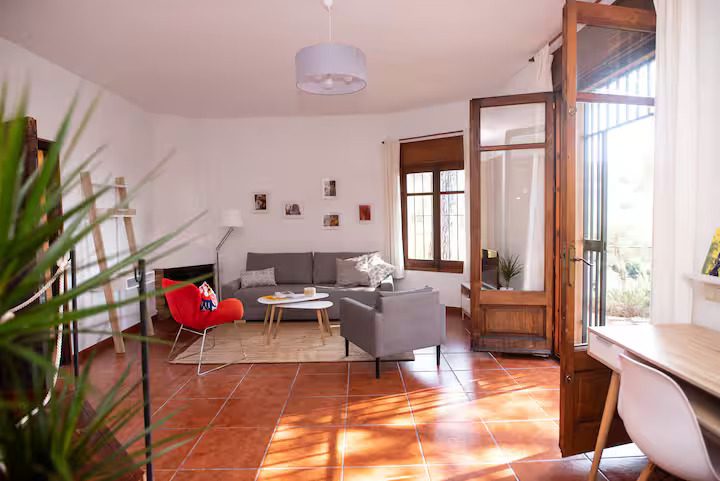
Nestled along the Catalonian coast, just a short drive from Barcelona, Cabrils is a charming village that seems to exist in perfect harmony with the sea and the surrounding mountains. It’s not the kind of place that overwhelms you with crowds or flashy attractions. Instead, it invites you to slow down, to breathe, and to immerse yourself in a gentler rhythm of life. For three days, this tranquil corner of Spain became our home—and at the heart of our experience was Carla, our exceptional Airbnb host.
A Mediterranean Dream
Nestled along the Catalonian coast, just a short drive from Barcelona, Cabrils is a charming village that seems to exist in perfect harmony with the sea and the surrounding mountains. It’s not the kind of place that overwhelms you with crowds or flashy attractions. Instead, it invites you to slow down, to breathe, and to immerse yourself in a gentler rhythm of life. For three days, this tranquil corner of Spain became our home—and at the heart of our experience was Carla, our exceptional Airbnb host.
A Mediterranean Dream
Nestled along the Catalonian coast, just a short drive from Barcelona, Cabrils is a charming village that seems to exist in perfect harmony with the sea and the surrounding mountains. It’s not the kind of place that overwhelms you with crowds or flashy attractions. Instead, it invites you to slow down, to breathe, and to immerse yourself in a gentler rhythm of life. For three days, this tranquil corner of Spain became our home—and at the heart of our experience was Carla, our exceptional Airbnb host.
 English
 Français
 Español
0 Comments